Overcoming Europe’s lack of action towards Israel: A non-exhaustive overview of legal and political measures that can be taken by the EU and its member states to act in compliance with international and European law
Dr. Sven Kühn von Burgsdorff
Veröffentlicht: 28.10.2026
Lesezeit: 10 Minuten
Von: Dr. Sven Kühn von Burgsdorff
Themen: Diplomatie, Völkerrecht, Palästina, Israel, Deutschland, Sanktionen, Waffenlieferungen, E1-Gebiet, Westjordanland, Gaza Strip, Siedlungspolitik, EU-Israel-Assoziierungsabkommen, Gaza Tribunal, Drittstaatenpflichten, Medienberichterstattung.
Overcoming Europe’s lack of action towards Israel: A non-exhaustive overview of legal and political measures that can be taken by the EU and its member states to act in compliance with international and European law
Dr. Sven Kühn von Burgsdorff
Legal measures to be taken at EU level
A. The European Commission must show leadership and act in accordance with international law, notably applicable ICJ rulings and opinions, as well European law, including in the context of the EU-Israel Association Agreement, by immediately bringing forward legislative proposals to:
1. Suspend with immediate effect all arms and dual use exports to Israel;
2. Ban trade with Israel’s illegal settlements in occupied Palestinian territory and prohibit EU and member states’ commercial and investment relations with any entity or company doing business in or benefiting from Israel’s illegal settlements;
3. Suspend all preferential commercial arrangements for Israel under the Association Agreement;
4. Cancel Israel’s participation in Horizon Europe and all dual use research, academic and technology programmes of the EU.
B. In addition, the EU institutions and EU member states can take decisive legal action under the CFSP framework, notably by imposing:
1. Targeted sanctions on Israeli Ministers, government officials, military commanders, and violent settlers responsible for war crimes, crimes against humanity, facilitating genocide and carrying out State-sanctioned terrorism;
2. With respect to the illegal E1 settlement project, as an initial response, targeted sanctions, including visa bans and prohibitions on doing business in the EU on all those engaged in illegal settlement activity, in particular those promoting, tendering for and implementing the E1 Plan. These entities and individuals include politicians, settler leaders, the Israeli ‘Land Authority’, representatives of local authorities, planners, lawyers, architects, engineers, developers, contractors, banks and other financing institutions.
3. Activate the EU Blocking Statute in support of ICC judges and prosecutors as well as UN rapporteurs and senior staff targeted by extra-territorial US sanctions.
Legal measures that can be taken at the level of EU Member States
(These are in addition to the above-mentioned EU actions)
While collective action at Union level is indispensable and preferrable to isolated measures by single states, in the absence of any serious peace process, Member States can be proactive individually and/or in ‘groups of like-minded countries’ in creating a critical mass of support, within the EU and beyond, in pursuit of protecting and enforcing international law by:
1. Unilaterally suspending or revoking arms export licenses to Israel under Member States’ own national export control laws, including for dual-use equipment and technology;
2. Stopping the funding of national co-financed projects involving Israeli entities or withdrawing from joint research agreements with Israeli institutions and research bodies, with respect to Horizon Europe, where there is plausible evidence that such funding supports actions illegal under international law;
3. Directing public universities and other entities to cease collaboration with Israeli entities suspected of being involved in atrocity crimes;
4. Enforcing their own national sanctions’ regimes on human rights grounds and counter-terrorism laws, including visa bans and asset freezes;
5. Introducing prohibitions on trade in goods and services with illegal settlements, pending an EU-wide ban on trade, and on the basis of applicable WTO stipulations, noting that several EU member states already banned the imports of goods originating from illegal settlements;
6. Divesting from and excluding illegal settlement linked companies from public procurement, state investment and sovereign wealth funds;
7. Banning port calls or use of airspace for Israeli military vessels and aircraft, as well as transit stops for any vessels / aircraft transporting military equipment and munitions to Israel;
8. Prosecuting indicted Israeli and Palestinian war criminals if they enter their territory, or in some cases even in absentia for Member States that have universal jurisdiction provisions (Germany, Spain, Belgium, France, Sweden, .....). All Member States are of course obliged to support the ICC with arrest warrants and investigations; and
9. Prohibiting data centres and platforms based in Europe from receiving, storing or treating data originating from Israeli government or commercial sources relating to the Israeli government's presence and activities in Gaza and elsewhere in the occupied territories.
10. Recognize Palestinian statehood to create the necessary prerequisite for a two-state solution.
Background to the proposed actions at member states level:
Action 2 - Horizon Programme:
Companies mentioned in the UN Special Rapporteur’s report of 16 June 2025 should be prohibited from accessing funds under both the HORIZON programme and the newly announced Euro 150 billion SAFE (Security Action for Europe) programme for defence.
Action 4 - Visa Bans as part of national sanctions regimes:
At a minimum, review the application of current visa free travel arrangements for Israel, to require applicants to sign a declaration that they have not engaged with acts of violence, or in support of same, in the occupied Palestinian territory. While Schengen states have a shared framework for visas and borders each member retains sovereignty to impose national travel bans on third-country nationals for reasons such as security, public order, human rights, or anti-terrorism. Such bans can be purely national or Schengen-wide if a Schengen Information System alert is issued.
Action 4 - Asset Freezes and financial services as part of national sanctions regimes:
National authorities can enforce the human rights obligations applying to all their external suppliers and enforce accountability and impose legal consequences for serious violations of international law under the EU Directive on Corporate Sustainability Due Diligence, e.g. relevant national laws in France and Germany. Sanctions could include the blocking of EU-Israeli banking and financial services transactions, including the access to SWIFT, in respect of any Israeli financial institution that has financed, supported or condoned the government’s unlawful actions in Gaza and the West Bank, or that has given loans to any body manufacturing arms for the IDF.
Action 5 - Prohibitions on trade with illegal settlements:
Any individual member state trade restriction should be taken in order to give momentum to the EU-wide measures being called for and be in conformity with international (WTO) law. Articles XX and XXI of the GATT/WTO permit members of WTO to take any trade measure necessary to protect public morals, in response to an international emergency, which affects the country's essential security interests, or taken to fulfil its obligations under the UN Charter e.g. the implementation of UNSC and UNGA Resolutions. In addition, already in 2019 the ECJ ruled that products from the occupied Palestinian territory must be labelled as such and not as originating in Israel. That binding ruling must now be implemented systematically by EU MS’ customs’ authorities.
Political measures that can be taken at EU level
1. Support international and national judicial mechanisms - including the International Criminal Court and domestic courts under universal jurisdiction - to bring perpetrators to justice.
2. Provide political, legal, and financial support to Palestinian civilian victims, human rights defenders, and humanitarian organizations operating under impossible conditions.
3. Resume international aid deliveries immediately at scale and flood the Gaza strip with humanitarian supplies, in full respect of the core principles of international humanitarian law.
4. Continue supporting UNRWA politically and by providing the requested financing for continued humanitarian operations in both Gaza and the West Bank.
5. Desist from membership of the “Board of Peace” which, in its current guise, includes an ICC indicted war criminal and whose Charter and governance regime threaten to undermine, if not in reality to supplant, the role of the UN in safeguarding peace and security.
6. Launch immediately a critical, time limited, dialogue with Israel on the application of the relevant provisions of the EU-Israel Association Agreement and establish a set of human rights benchmarks against which to monitor Israel’s future conduct. Non-compliance with these benchmarks should lead to the imposition of additional EU sanctions on the Israeli government. In the absence of constructive responses and actions on these concerns, adopt measures aimed at stopping Israeli excesses and unremitting violations of international law, including suspending the Agreement in full.
7. Reach out proactively to like-minded and strategic partners in the OECD, the Middle East, the Global South and other G20 members to establish common positions and develop initiatives to promote peace, such as joining the The Hague Group and strengthening the Global Alliance for the Promotion of the Two-State solution.
------------------------------------------------------------------------
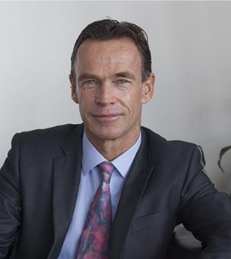
Dr. Sven Kühn von Burgsdorff studied political science and international law at the Albert-Ludwigs-University of Freiburg . He then completed a postgraduate program in development cooperation at the German Development Institute in Berlin . From 1988 to 1992, he worked for the German Agency for Technical Cooperation (GTZ) in Lomé , Togo , and at its headquarters in Eschborn .
Sven Kühn von Burgsdorff joined the European Union 's service in 1992 and worked in the field of EU external relations until his retirement in July 2023. Besides his posting at headquarters in Brussels , he served in Bratislava , Port-au-Prince , Nouméa , Miami , Havana, Juba, Maputo, and Jerusalem. He represented the EU as Chargé d'affaires ai in Cuba from 2003 to 2007, as Ambassador to South Sudan from 2012 to 2014, as Ambassador to Mozambique from 2014 to 2018 , and in the Palestinian Territories from 2020 to 2023 .
Since his retirement, Sven Kuehn von Burgsdorff has been publicly active as an analyst and commentator advocating for a sustainable peace solution in the Middle East. Together with former EU ambassadors, he founded the advocacy initiative "EU Ambassadors for Peace" in July 2025. In its public statements, the initiative strongly urges political decision-makers in EU institutions and member state governments to take action. The group's most recent statement, dated October 5, 2026, was signed by 523 former European ambassadors, high-ranking officials, and politicians.
His talk in Session VII of the Gaza Tribunal 2026 on the role of the European Union was followed by a legal analysis of the EU and international law framework by Lucio Gussetti. See the full program of the conference here.
Offenen Brief hier unterschreiben
Der offene Brief wird laufend durch neue Mitzeichnungen ergänzt. Wir bieten keine individuelle Rechtsberatung an, sondern bündeln die Stimmen engagierter JuristInnen, um öffentlich für Menschenrechte, Rechtsstaatlichkeit und die konsequente Achtung des Völkerrechts einzutreten.
Vernetzen Sie sich
mit uns:
Jetzt spenden:
